Why Nontoxic Candles Matter (And What's Actually in the Ones You're Burning)
Let's be honest — most of us don't think twice about what's in a candle. You smell something you love, the packaging looks good, the price is right. Done.
But here's the thing: candles aren't just decor. You're burning them in enclosed spaces, breathing in whatever they release, sometimes for hours at a time (and most of the time for too long). And what most conventional candles are made of? It's worth knowing about.
I'm not here to fear-monger. I make candles for a living — I love candles. But I got into this specifically because I wanted to make something I actually felt good about burning in my own home. It's also a big reason why I started SZND GOODS in the first place.
THE WAX PROBLEM
The majority of mass-market candles are made with paraffin wax. Paraffin is cheap, widely available, and holds fragrance well — which is exactly why the industry defaulted to it for decades.
It's also a petroleum byproduct.
When burned, paraffin wax can release volatile organic compounds (VOCs) including benzene and toluene — both recognized toxins. To put it plainly: that's the same category of compounds you'd find in car exhaust. Now, to be fair, the levels released by a single candle are generally low. But burn candles regularly in a poorly ventilated space, and that exposure adds up. On top of burning candles for more than the recommended 3-4 hours, thats a long time of exposure, especially if you're someone that burns candles every single day.
THE FRAGRANCE PROBLEM
Wax is only part of the equation. Fragrance is where things get murky fast.
"Fragrance" on an ingredient label is a catch-all term that can legally cover hundreds of undisclosed chemicals. One of the most common culprits hiding in synthetic fragrance blends? Phthalates — a class of chemicals used to help scents last longer and bind to other materials. Phthalates are endocrine disruptors, meaning they can interfere with hormonal function. And who needs that? Absolutely nobody.
Clean fragrance oils exist — they're formulated without phthalates, carcinogens, and reproductive toxins. But not every brand uses them, and not every brand will tell you either way.
THE WICK PROBLEM
Yes, even the wick.
Lead-core cotton wicks were banned in the US in 2003, but they still show up in imported candles. A burning lead wick releases lead particles into the air — not something you want floating around your living room. And imagine having animals in your house that are also inhaling those particles too.
Most reputable brands use cotton or wood wicks without lead cores. But again — you have to know to look.
SO WHAT DOES "NONTOXIC" ACTUALLY MEAN?
It means the brand made intentional choices at every step:
→ A clean wax base — coconut, soy, beeswax, or a blend — instead of paraffin
→ Fragrance oils that are phthalate-free, carcinogen-free, and free of reproductive toxins
→ Wicks without lead cores — cotton or wood
→ Dyes (if used at all) that are skin-safe and non-toxic
→ Transparency — a brand that will actually tell you what's in their candles
WHY IT MATTERS FOR YOUR HOME
You burn candles in your bedroom. Your bathroom. Your living room — the places you actually live and breathe. People with asthma, allergies, pets, or babies in the house are especially sensitive to what's being released into the air.
Switching to a nontoxic candle isn't a dramatic lifestyle overhaul. It's a small swap that removes something unnecessary from your environment. And once you make the switch, going back to a paraffin candle in a closed room becomes noticeably different.
WHAT TO LOOK FOR WHEN YOU SHOP
You don't have to do a deep chemistry dive every time you buy a candle. A few quick questions will tell you a lot:
→ What's the wax? (Coconut, soy, or a blend are good signs. Paraffin or "proprietary blend" with no further info — proceed with skepticism.)
→ Are the fragrance oils phthalate-free? (A brand that cares about this will say so.)
→ What kind of wick? (Cotton or wood, without lead.)
→ Does the brand actually disclose this information? (Transparency is the baseline.)
If a brand can't answer those questions, that's an answer in itself.
THE BOTTOM LINE
Nontoxic candles aren't a niche thing anymore. They're just better candles — made with intentional ingredients, by brands that care about what ends up in your home.
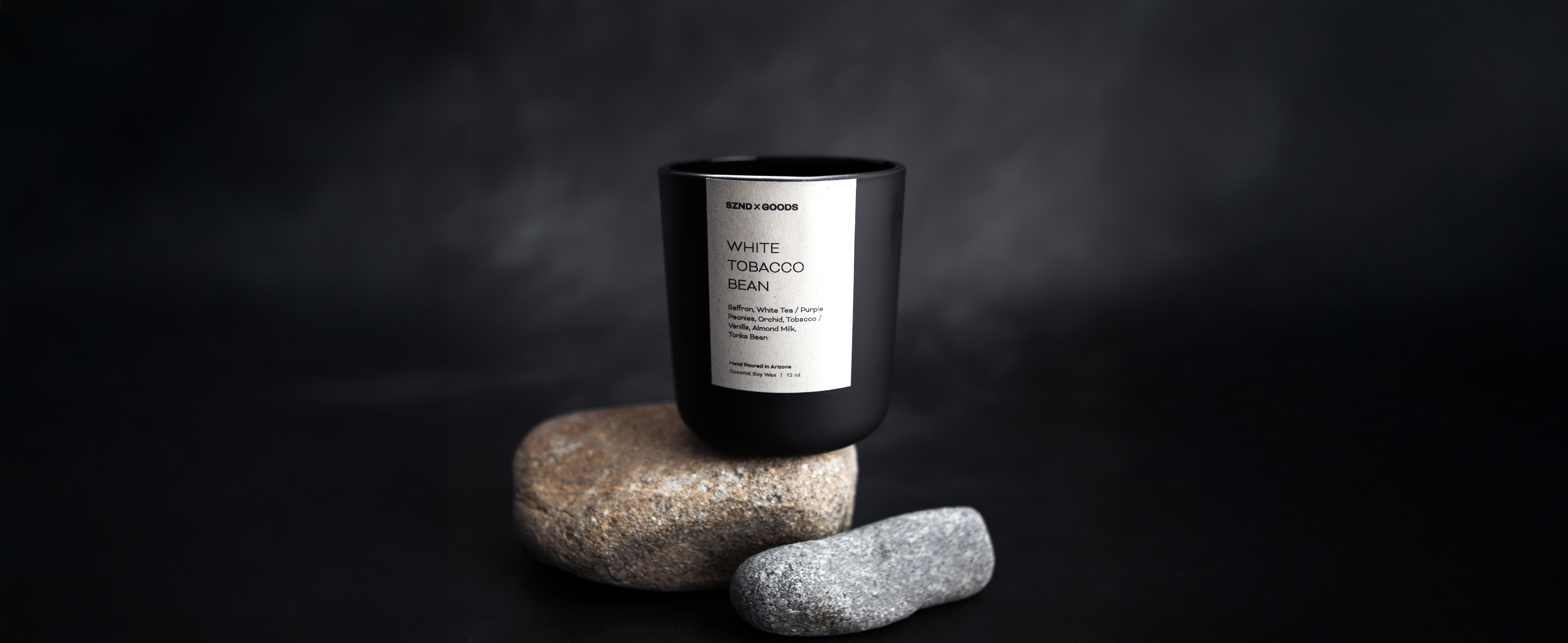
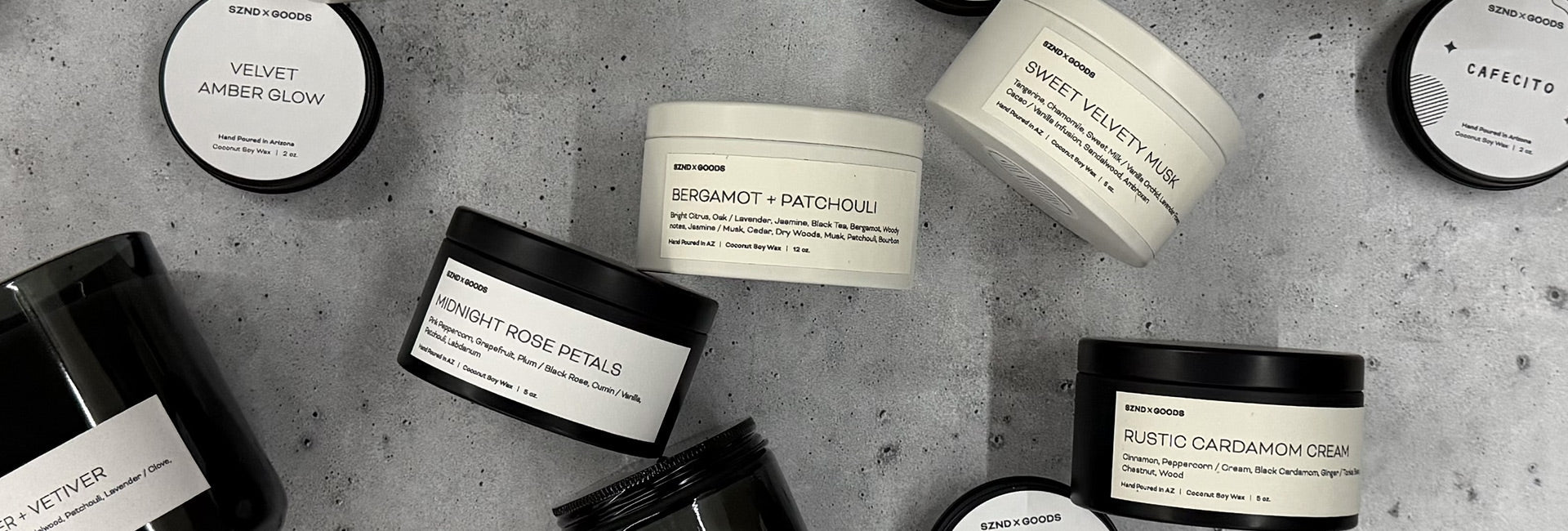
At SZND GOODS, every candle is made with coconut soy wax, clean phthalate-free fragrance oils, and wooden wicks — hand-poured in small batches in Phoenix, AZ. No fillers, no shortcuts, no ingredient mystery.
→ Shop the collection at szndgoods.com
© SZND GOODS · szndgoods.com

Written by Ashley Bryant