Article: Coconut Soy Wax vs. Plain Soy Wax: What's Actually the Difference?

Coconut Soy Wax vs. Plain Soy Wax: What's Actually the Difference?
If you've been shopping for cleaner candles, you've probably seen "soy wax" used like it's the gold standard. And look — soy is genuinely better than paraffin. But here's what most candle brands won't tell you: not all soy candles are the same, and "soy wax" alone doesn't tell the full story.
Coconut soy wax and plain soy wax are two different things. The difference matters more than you'd expect — and you can actually feel it in the candle.
Let me break it down.
WHAT IS PLAIN SOY WAX?
Plain soy wax is made from hydrogenated soybean oil — a natural, renewable resource. It became popular as an alternative to paraffin in the early 2000s and for good reason: it burns cleaner, it's biodegradable, and it's domestically sourced in the US.
But it comes with some real limitations:
→ Lower scent throw. Soy wax has a lower fragrance load capacity than coconut wax, which means the scent you smell — especially cold — can be faint. It often doesn't fill a room the way you'd expect.
→ Frosting. Plain soy wax is notorious for developing a white, powdery film on the surface over time. It's a natural characteristic of soy, not a quality defect — but it can make candles look rough or old.
→ Rough tops after burning. Soy wax can pull away from the sides of the jar and leave an uneven surface after each burn.
→ Softer texture. Plain soy is a softer wax, which can affect how well it holds its shape and structure in the jar.
None of these are dealbreakers — lots of great candles are made with plain soy. But they're real trade-offs.
WHAT IS COCONUT SOY WAX?
Coconut soy wax is a blend of coconut wax (derived from the meat of coconuts) and soy wax. It keeps the clean-burning, natural benefits of soy while coconut wax fills in the gaps.
And the gaps it fills are significant.
WHY COCONUT SOY WAX IS A MEANINGFUL UPGRADE
Superior scent throw — cold and hot.
Coconut wax has a naturally higher fragrance load capacity, which means it can hold more fragrance oil without compromising the integrity of the wax. The result: a stronger, more accurate cold throw (the scent you smell when the candle isn't lit) and a fuller hot throw when it's burning. If you've ever lit a candle and been underwhelmed by the scent, there's a real chance the wax was the issue.
Slower, cooler burn.
Coconut wax has a lower melt point than soy, which means the candle burns at a lower temperature overall. A cooler burn = slower burn = a candle that lasts longer. It also means fragrance is released more gradually and evenly, instead of burning off too quickly in a hot rush.
A cleaner, creamier finish.
This is the one you can see. Coconut soy wax produces a smooth, creamy surface — both before and after burning. Less frosting, fewer rough tops, a more polished look in the jar. From a purely aesthetic standpoint, it just looks like a more premium product because it is.
Sustainable sourcing.
Coconut wax is derived from the cold-pressed meat of coconuts — a highly renewable crop. Coconuts grow year-round in tropical climates and don't require the same level of processing as soybean oil.
Fully vegan and skin-safe.
No animal byproducts. No beeswax, no tallow — just plant-based wax.
SO WHY DOESN'T EVERYONE USE IT?
Honestly? Cost. Coconut wax is more expensive than plain soy, which is more expensive than paraffin. Brands that are optimizing for margin will go with the cheaper option.
For small-batch makers who are more focused on the quality of what ends up in your home than on cost-per-unit, coconut soy is worth it.
HOW TO TELL WHAT YOU'RE BUYING
Most brands will list the wax type somewhere — on the label, the product description, or their FAQ. If you see "natural wax blend" with no further explanation, it's worth asking. A brand that's using quality ingredients is usually happy to tell you.
What you want to see: coconut soy wax, coconut wax blend, or a specific breakdown of the wax used.
What to approach with caution: "proprietary wax blend," "natural wax" with no further detail, or no wax information at all.
THE BOTTOM LINE
Soy wax is a solid choice. Coconut soy wax is a better one — better scent, better burn, better finish, same clean-ingredient ethos.
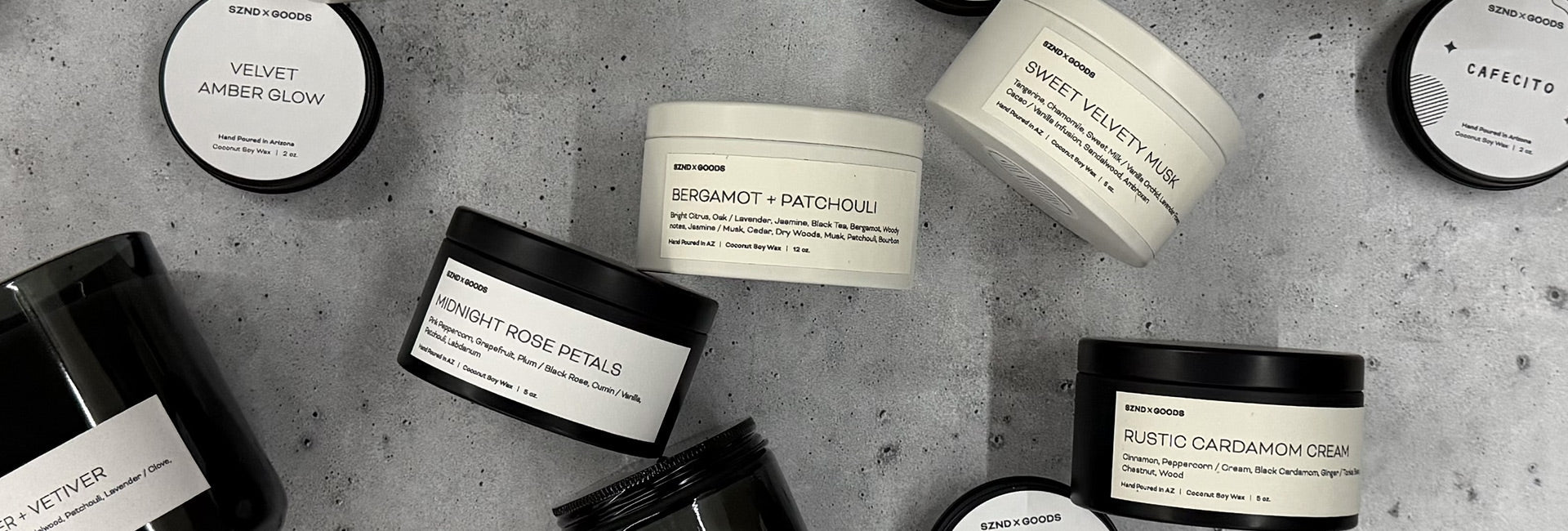
At SZND GOODS, every candle is made with a coconut soy wax blend for exactly these reasons. The scent throw is fuller, the burn is slower, and the finish in the jar is smooth every time.
→ Shop the collection at szndgoods.com
© SZND GOODS · szndgoods.com

Written by Ashley Bryant